
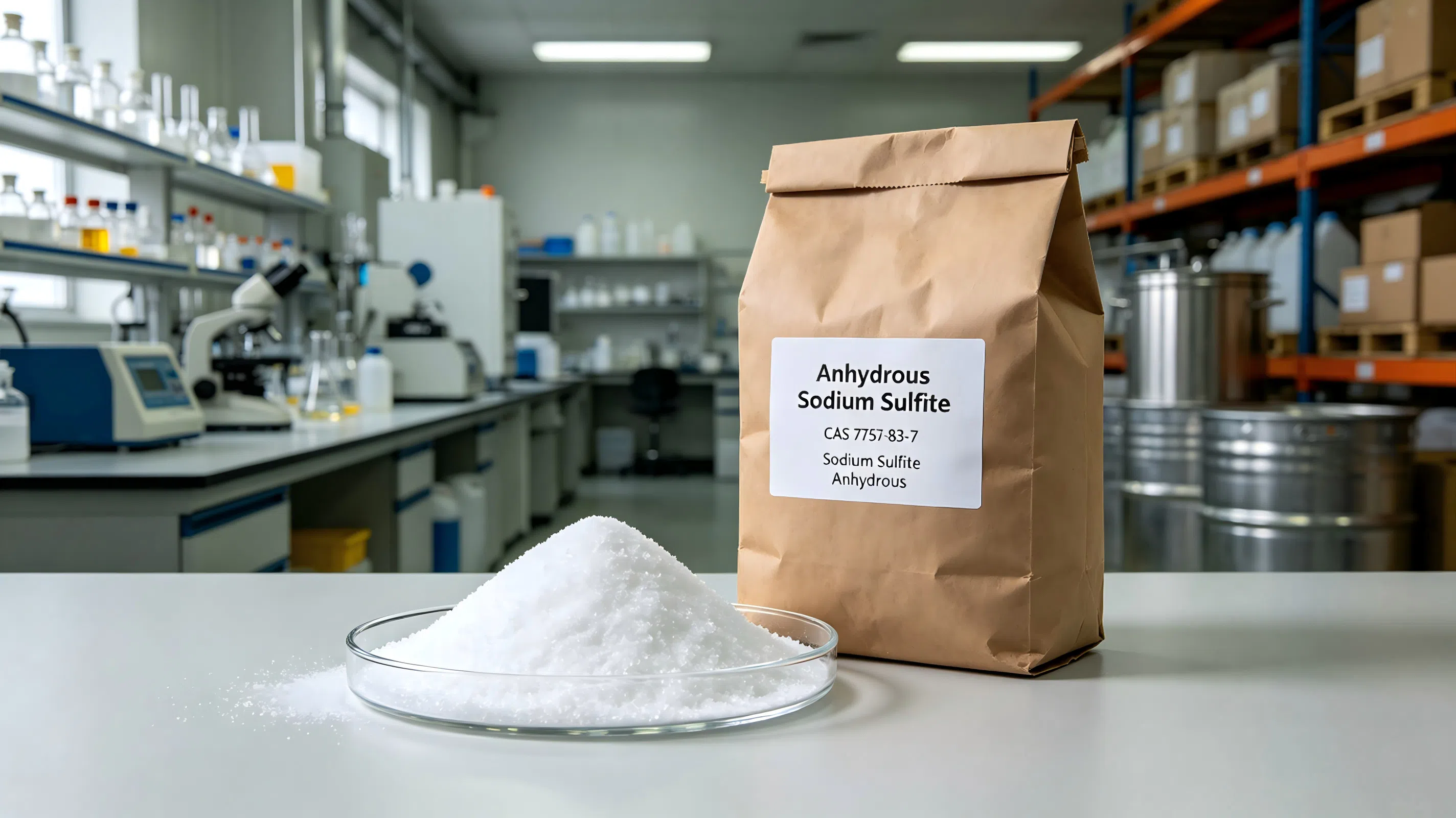
Let's be honest about what this product looks like: a plain white powder in a 25 kg bag. Nothing fancy. Some months anhydrous sodium sulfite costs less per ton than the freight to ship it. And yet, get the wrong grade of sodium sulfite, or leave a pallet sitting through one humid summer, and you'll watch it slowly turn into sodium sulfate while your dechlorination numbers drift out of range. That's the whole reason for this article — to keep you from learning that lesson the expensive way.
So What Is It, Actually?
It's Na2SO3 — molecular weight 126.04 — and it travels through life under the name CAS 7757-83-7.
You'll see that number on the customs form, the safety data sheet, the purchase order, and the bag itself. Check that they all match before you sign. Does this really happen? More often than you'd think. Spot-market traders mix up paperwork now and then, and guess who eats the cost when they do.
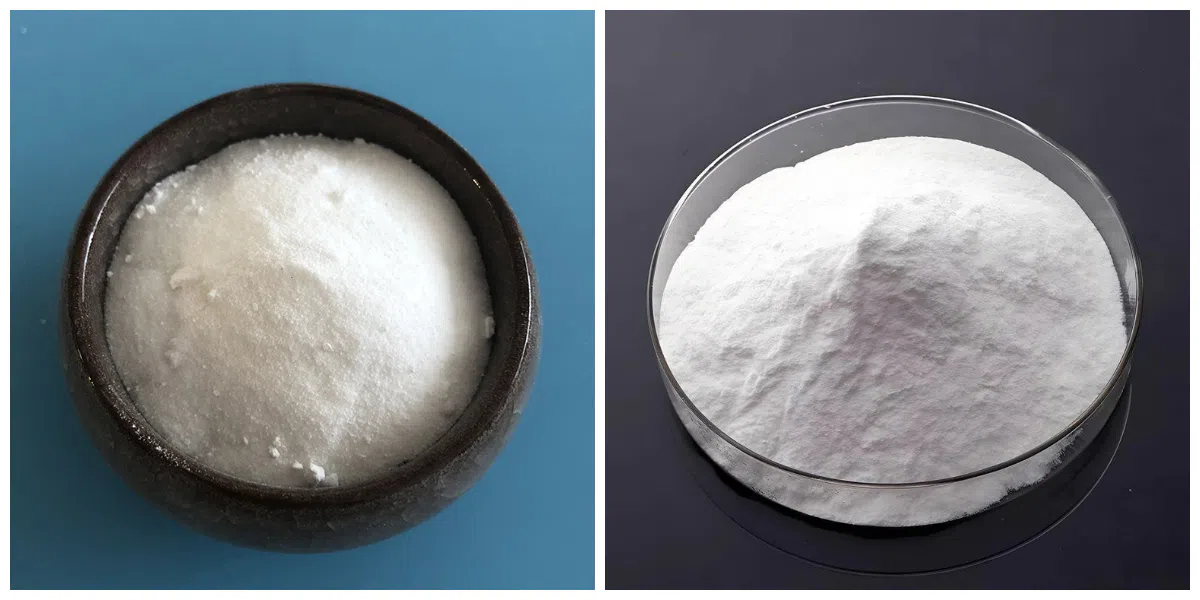
Hold a handful (carefully) and it pours like fine table salt — white, no smell, flows freely.
Toss it in water and it disappears fast: about 28 grams per 100 milliliters at room temperature, more if you heat it. The solution comes out mildly alkaline, pH around 9. Why does that matter? Because acid chemicals slowly chew holes in steel equipment, and this one doesn't.
The real trick is its appetite for oxygen.
The sulfite ion grabs dissolved oxygen and free chlorine before either can corrode a boiler tube or wreck a dye batch. But here's the catch — leave a bag open in damp air and the same reaction runs on its own, quietly eating your inventory. With this product, the packaging isn't an afterthought. It basically is the product.
How They Actually Make It
Nearly all commercial sodium sulfite starts from two cheap inputs:
soda ash and sulfur dioxide gas. Factories bubble the SO2 through a soda ash solution in absorption towers, let the sodium sulfite liquor clear up, then evaporate and dry it down under tight temperature control. Mess up the drying and the bags arrive caked. Overdo the heat and you're just burning money — the salt is stable far beyond anything a dryer needs.
So if everyone makes it the same way, why do factories differ?
Four lines on the certificate of analysis. Main content: mainstream industrial grade runs 97% Na2SO3 or better, and good plants hold 97.5% to 98% batch after batch. Iron: the silent dealbreaker, because above roughly 50 ppm the powder starts graying out paper and fabric. Then water-insoluble matter and leftover sodium sulfate. Don't ask a supplier for their brochure — ask for the latest CoA and put those four lines next to your own spec. The gap between factories shows up right there.
Where the Tons Actually Go
Boiler Rooms and Treatment Plants
Plant engineers dose sodium sulfite into feedwater to strip out dissolved oxygen before it can pit drums and pipelines. On the other end of the pipe, wastewater operators use sodium sulfite to knock down residual chlorine so discharges pass permit checks. Quick reaction, well-understood dosing math, and it still wins tenders on cost per unit of oxygen removed — decade after decade. Not glamorous. Just dependable.
Paper Mills
Pulp is still the single biggest buyer of sodium sulfite on the planet.
Mill purchasing teams reorder it the way they order steam: continuously. Sodium sulfite goes into cooking liquors, bleach sequences, and antichlor steps after bleaching. And purity is non-negotiable here — trace metals darken pulp, so paper contracts spell out hard ceilings on iron and insolubles, not just the headline assay.
Dye Houses
Textile finishers use it as a reducer and antichlor:
clearing leftover chlorine after bleaching, holding vat and sulfur baths in the right reduction state. But talk to dye masters and you'll notice what they're really buying is consistency. An assay that wanders by half a point shows up the same afternoon as off-shade rolls — and those rolls don't sell at full price.
Food, Pharma and the Old Niches
As additive E221, it keeps color and slows spoilage in things like dried fruit. Pharma formulators use it to stop certain preparations from oxidizing on the shelf. Both grades come with heavier paperwork than industrial material, and most markets now require sulfite warnings on labels — a slice of the population genuinely can't tolerate the stuff. Past that, photographic developers still buy it to protect developing agents from air, and electronics cleaning blends take a small but steady share.
What the Market's Saying Right Now
The numbers floating around: global sodium sulfite sales near USD 250 million in 2025, heading to about USD 300 million by 2031. That's growth in the 3.5% range per year — not exciting, but look closer at where it's coming from.
Water treatment is pulling everything upward, thanks to tightening discharge rules in Southeast Asia, the Gulf, and Latin America. Meanwhile production sits overwhelmingly in Asia-Pacific, with Chinese and Indian plants setting the world price. Which means what, for you? That picking the right supplier — not finding the cheapest quote — has become the actual job. Food-grade volumes, on the other hand, have been shrinking in North America and parts of Europe since 2020, squeezed by clean-label trends and mandatory sulfite warnings. Practical read: industrial demand you can count on, food demand you can't. Contract them separately, and don't let a supplier blur the two lead times.
Six Checks Before You Wire the Deposit
1️⃣CAS 7757-83-7 on the quote, the CoA, and the shipping label — same number, three documents. Takes thirty seconds to check.
2️⃣Latest CoA next to your own spec sheet, line by line. Assay, iron, insolubles, sulfate. Trust nothing labeled just "industry standard."
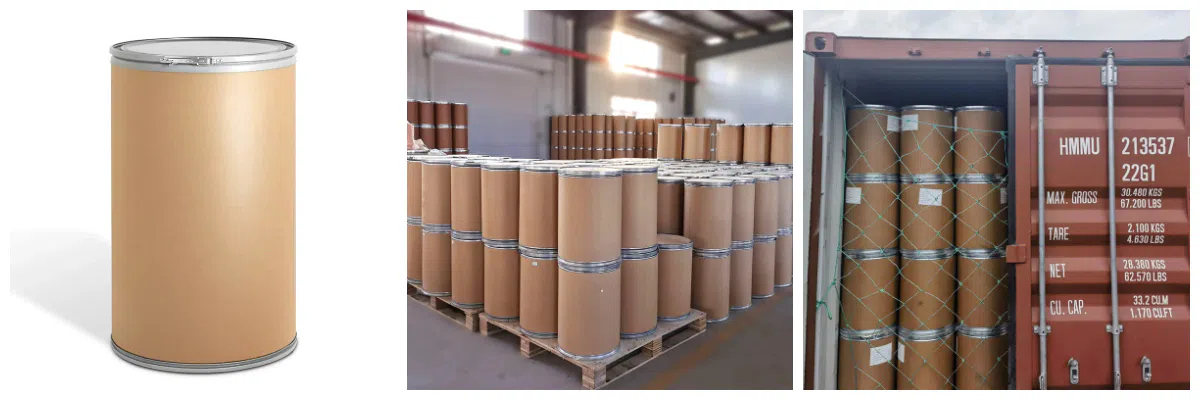
3️⃣Get packaging in writing: 25 kg woven bags with PE liners, or 500 kg / 1,000 kg jumbo bags. A full 20-foot container carries 20 to 25 metric tons depending on the setup.
4️⃣Ask the moisture question straight out: how are pallets wrapped, do containers get desiccants? Clumped bags have already started oxidizing — no undo button on that.
5️⃣EU-bound? Check REACH registration. Food grade? The plant should hold FDA facility registration.
6️⃣Run a sample of the sodium sulfite through your own line before the main order. Any manufacturer who's confident in their anhydrous sodium sulfite will say yes without blinking. If they hesitate, that's your answer.
Questions Buyers Keep Asking
Could I just use sodium metabisulfite and save some money?
Sometimes, but not automatically. Metabisulfite (Na2S2O5) acidifies in solution and releases SO2 more aggressively — fine for some processes, a problem for others. Sodium sulfite stays alkaline, which is why boilers and dechlorination programs keep coming back to it. Steel equipment likes neutral chemistry.
Why did my last shipment show up clumped?
Air and moisture, almost every time. Sodium sulfite oxidizes toward sulfate the moment humidity gets in, and there's no reversing it. Lined bags, wrapped pallets, dry container, then store it sealed and off the floor. That's the whole defense.
Is 97% good enough, or should I pay extra?
For most industrial work, a steady 97% from a plant with iron under 50 ppm beats an inconsistent 98% every time. Paper and textile buyers: look at the iron figure first. And treat any quote below 96% as a question — why is it that cheap? The answer usually isn't pleasant.
How fast do orders ship?
Established Asian factories usually dispatch standard 25 kg bag orders within one to two weeks of confirmation, on FOB, CIF, or CFR terms — your pick. Special grades and jumbo-bag programs can add a few days, so pad your planning a little.
One Last Thing
Here's the uncomfortable truth: because this product looks simple, weak suppliers survive in this market for years. Don't feed them. If you're collecting anhydrous sodium sulfite quotes right now, send over your spec and monthly volume — you'll get a current CoA, packing options, and a straight FOB or CIF number for your port, plus samples if you want to prove the material on your own line first. We answer chemistry questions with test data, not adjectives.


