
Industrial Grade Xylene: Key Details for Dealers and Bulk Buyers (CAS#1330-20-7)
Ask anyone on a paint shop floor about xylene and they will point at a drum. Ask a polyester trader and they will start talking about PTA. Same liquid. Two very different worlds.
Xylene, CAS 1330-20-7, is a workhorse chemical. Nobody thinks about it until the price jumps. Then everyone calls at once.
The buyer list is longer than people expect. Paint plants. Ink makers. Tyre factories. PET producers. Even histology labs.
Hunting for a xylene CAS 1330-20-7 supplier right now? You probably have three questions. What exactly am I buying? What is it used for? And why did quotes move this month?
Fair. All three get answered below, with September 2026 numbers. Not articles from five years ago.
What Exactly Is Xylene (CAS 1330-20-7)?
Start with the basics. CAS 1330-20-7 is not one single molecule. It covers three isomers: ortho-xylene, meta-xylene and para-xylene. Same formula, C8H10. Different shapes.
Mixed xylene is what most drums hold. All three isomers together, in ratios that shift with the production route.
Want the split? Meta-xylene usually takes the biggest slice. Para- and ortho-xylene follow.
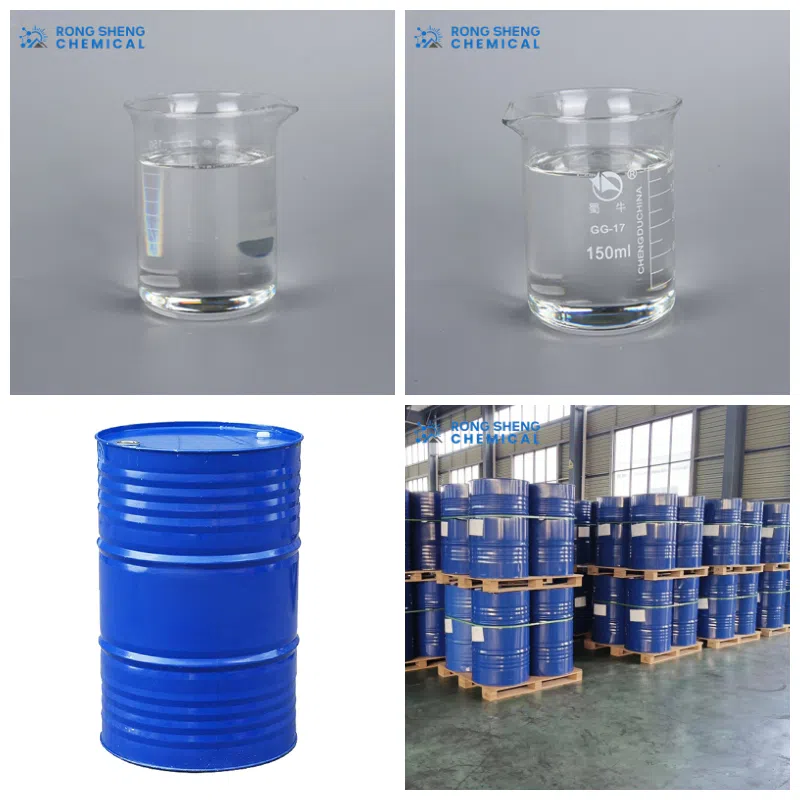
In a drum, industrial grade xylene looks like a clear, watery liquid. Sharp smell. Lighter than water, density near 0.86 g/cm³, boiling range roughly 138 to 144 degrees C.
One more thing worth knowing. "Xylene" and "xylol" mean the same thing on older specification sheets. Don't let the label throw you.
Main Uses of Xylene
1. Industrial grade xylene for paint and coating solvent
This is the big one on the solvent side. Alkyd paints, lacquers, epoxy systems, varnishes, road marking paint. All of them thin well with xylene.
Why? Evaporation speed. It dries fast enough to handle, slow enough to level out and leave a clean film. Water-based systems still can't match that flow.
Spray shops like it for the same reasons. It cuts viscosity without blushing, and it dissolves resins that weaker solvents leave behind.
Thinning ratios? Follow the paint maker's data sheet, usually somewhere between 10% and 30% by volume. And read the reducer label carefully. Many reducers are xylene blends rather than straight xylene, and the difference shows up in drying time.
2. The polyester chain: from p-xylene to your water bottle
Half the world's xylene ends up somewhere else entirely.
Para-xylene gets oxidised into PTA. PTA plus MEG gives PET. PET becomes bottles, fibres, food trays. So every soda bottle and polyester shirt traces back to a xylene molecule.
Buying xylene as an organic raw material for chemical synthesis? Then you're standing in the middle of that chain, and PTA economics will shape your quotes more than paint demand will. China's Dalian exchange listed PX futures near 9,160 yuan per tonne on September 18. Worth a glance if you price against futures.
3. Printing inks, adhesives and rubber
Rotogravure and flexo inks run on xylene-based systems, especially on plastic films. Rubber adhesives and tyre compounds rely on it too.
And shoe factories. Lots of shoe factories.
Any industrial xylene trader wholesale account in Southeast Asia will tell you the same thing. Footwear and packaging keep this part of the market steady year round.
4. Cleaning, degreasing and laboratory work
Xylene strips grease, wax and old adhesive off metal and glass. Workshops use it on engine parts. Printed circuit boards get cleaned with it. Histology labs clear tissue samples with it before staining.
Small volumes. Steady ones. This is also where many bulk xylene dealers for solvent application get their start before moving up to drum and tank loads.
5. Gasoline blending
One more, and it matters for price. Xylene carries a high octane number, so refiners blend part of the pool into fuel. When gasoline demand swings, solvent buyers feel it. Watch the pump, watch your quotes. More on that below.
2026 Market Review: Tight Supply, Firmer Prices
Here's where things stand this month.
Blame geopolitics first. The US-Iran conflict hasn't cooled down, crude keeps climbing, and aromatics follow crude. CCFGroup put the paraxylene rally at 20.5% by mid-September.
PX itself hit $1,267 per tonne CFR China on September 16, up almost 7% in a single week. FOB Korea stood near $1,246. Sinopec set its August PX settlement at 8,640 yuan per tonne. Downstream, spot PTA in East China closed the week at 7,112 yuan, up 618.
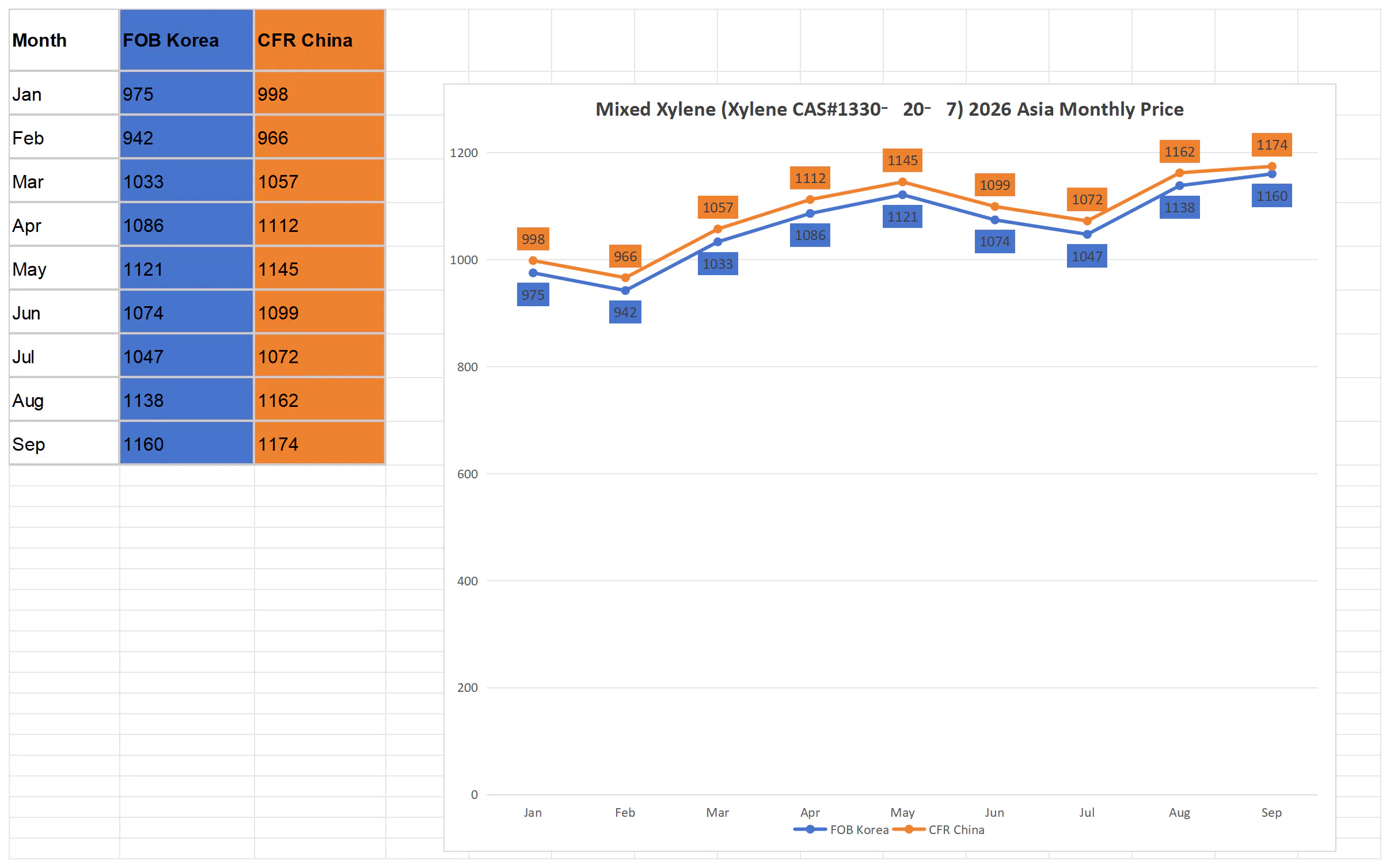
What about mixed xylene? ChemPriceHub's September 16 closes tell the story. FOB Korea sat near 1,182 dollars per tonne. CFR China around 1,196. Rotterdam printed 1,424, and the US Gulf Coast showed 533 cents per gallon. East China spot traded at 8,950 to 9,200 yuan per tonne, up 100 yuan in a day.
The US market moved too. ChemAnalyst logged a 4.04% rise into early September, pushed by firmer crude-linked replacement costs and tight prompt availability. Coatings buyers stayed cautious after the summer. PET-related demand didn't.
Supply is the other half of the story. Four Chinese PX units were down for maintenance during the week of September 10-16. Urumqi Petrochemical's 1 million tonne plant. Hainan Refining's 1.6 million tonnes. Fuhai Chuang's 800,000 tonnes. Yangzi Petrochemical's 890,000 tonnes. Domestic PX utilisation sat at 80.39%. Asia-wide, 70.64%.
MX tank inventories slipped as well. Port stocks dropped by roughly 14,400 tonnes in mid-September.
One caution, though. These prices swing daily. The Korean quotes fell 26 dollars on September 17. Treat any single print as a snapshot, not a trend.
Where Xylene Actually Comes From
Two main routes. Catalytic reforming of naphtha gives reformate, which is rich in aromatics. Steam cracking gives pyrolysis gasoline, and that gets processed into aromatics too. Toluene disproportionation adds a third stream.
This is why xylene prices track naphtha and crude so closely. You're really buying a slice of the oil barrel.
Quotes differ by grade, too. On September 17, isomerised xylene FOB Korea printed 1,156 dollars against 1,182 for mixed. Jiangsu domestic fell 210 yuan the same day, to 8,765. "Isomerised" means the isomer ratio has been shifted toward paraxylene. Solvent buyers usually want the mixed grade. PX producers pay extra for the isomerised one. Same molecule family, different customers, different money.
Quality Checks Before You Buy
Buying high purity xylene CAS#1330-20-7? Put five lines under the magnifying glass. Purity, usually 99% minimum. Distillation range. Benzene content. Sulphur. Colour, by Saybolt or APHA.
Ask for a certificate of analysis with every lot. Serious xylene chemical solvent suppliers send one without being asked. Got a purchase specification left over from your old vendor? Send it across. Matching a spec is far easier than guessing one. And an industrial grade xylene manufacturer factory worth its salt will hold batch-to-batch consistency tight, because paint lines are tuned to one evaporation profile. Swap sources without a trial and your film can blush or sag.
Packaging runs from 180-kilogram drums to ISO tanks and bulk vessels. Match the pack to your consumption. Drums for small spray shops. ISO tanks for coatings plants running every day.
Handling and Safety
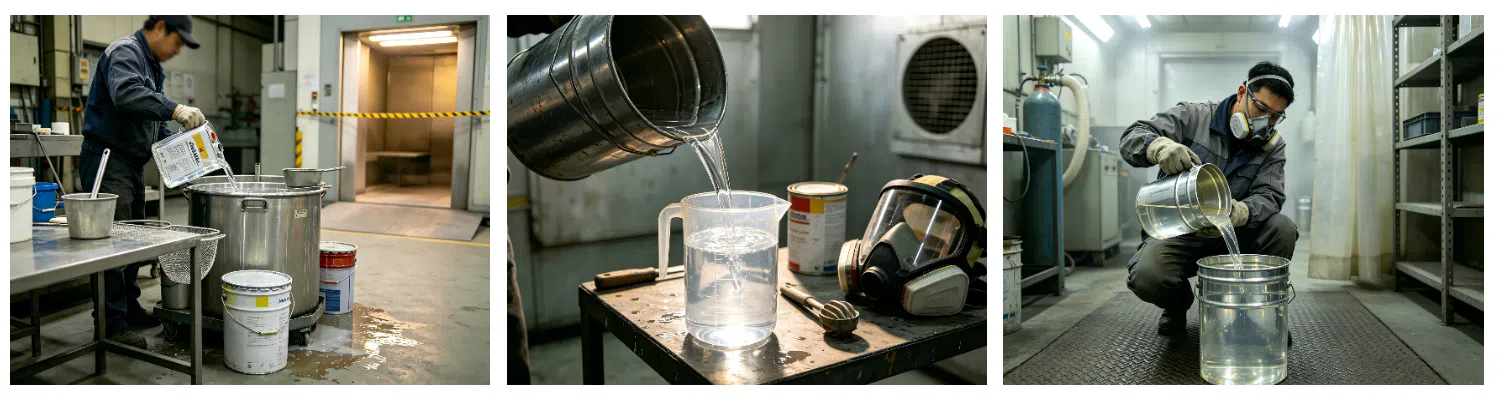
Real talk now. Xylene is flammable, and its vapour is heavier than air. Ground the drums. Ventilate the shop. No sparks, no flames, no phones near the decanting area.
Gloves, goggles, and an organic vapour respirator for enclosed spaces. Your nose will tell you when exposure is creeping up, but don't rely on it. Working outdoors? Fine. Just stay upwind.
Storage is simple. Cool room, away from oxidisers, grounded containers. Summer heat builds pressure inside a sealed drum faster than people expect.
Check your local VOC rules too. Several markets have tightened solvent emission limits for coatings, which is slowly pushing formulators toward higher-solids systems. Xylene isn't going away. The recipes around it are changing.
Frequently Asked Questions
What is the chemical name for the compound with CAS number 1330-20-7?
Xylene. Also called dimethylbenzene or xylol. The CAS entry covers three isomers: o-xylene, m-xylene and p-xylene.
What is the CAS number for xylene?
1330-20-7 for mixed xylene. The pure isomers carry their own numbers. 95-47-6 for ortho. 108-38-3 for meta. 106-42-3 for para.
Is xylene different than acetone?
Very. Both are solvents, and that's where the similarity ends. Acetone is a ketone. It mixes with water and flashes off extremely fast. Xylene is an aromatic hydrocarbon. It floats on water, evaporates slower, and cuts through resins acetone can't touch. Painters often use both. Acetone for surface prep, xylene for thinning.
What is the chemical xylene used for?
Paint and coating thinning. Printing inks. Adhesives. Rubber compounds. Cleaning and degreasing. Laboratory staining. And, through para-xylene, the entire PET polyester chain.
Outlook and Buyer Guidance
Where next? Most watchers expect firm prices into October while the Middle East situation and refinery maintenance keep supply tight. Softer gasoline demand could cap the upside later in autumn, especially in the US. Winter brings turnarounds too. Refineries schedule them when fuel demand dips, and aromatics supply dips right along with them.
One habit worth building. Track the PX-naphtha spread, not just absolute prices. When the spread widens, PX producers chase mixed xylene harder and solvent grades get squeezed. That pattern played out again this September.
Three moves make sense for buyers right now. Nail down Q4 volume before winter restocking tightens cargo availability. Qualify a second source, because one plant outage shouldn't stop your line. And fix the price basis in writing, FOB, CFR or delivered. Freight swings are adding real noise this quarter. Ask about payment terms early, too. Prompt cargoes don't wait for slow paperwork.
Ready to buy? We supply industrial grade xylene CAS#1330-20-7 with consistent batch quality, full certificates of analy


