
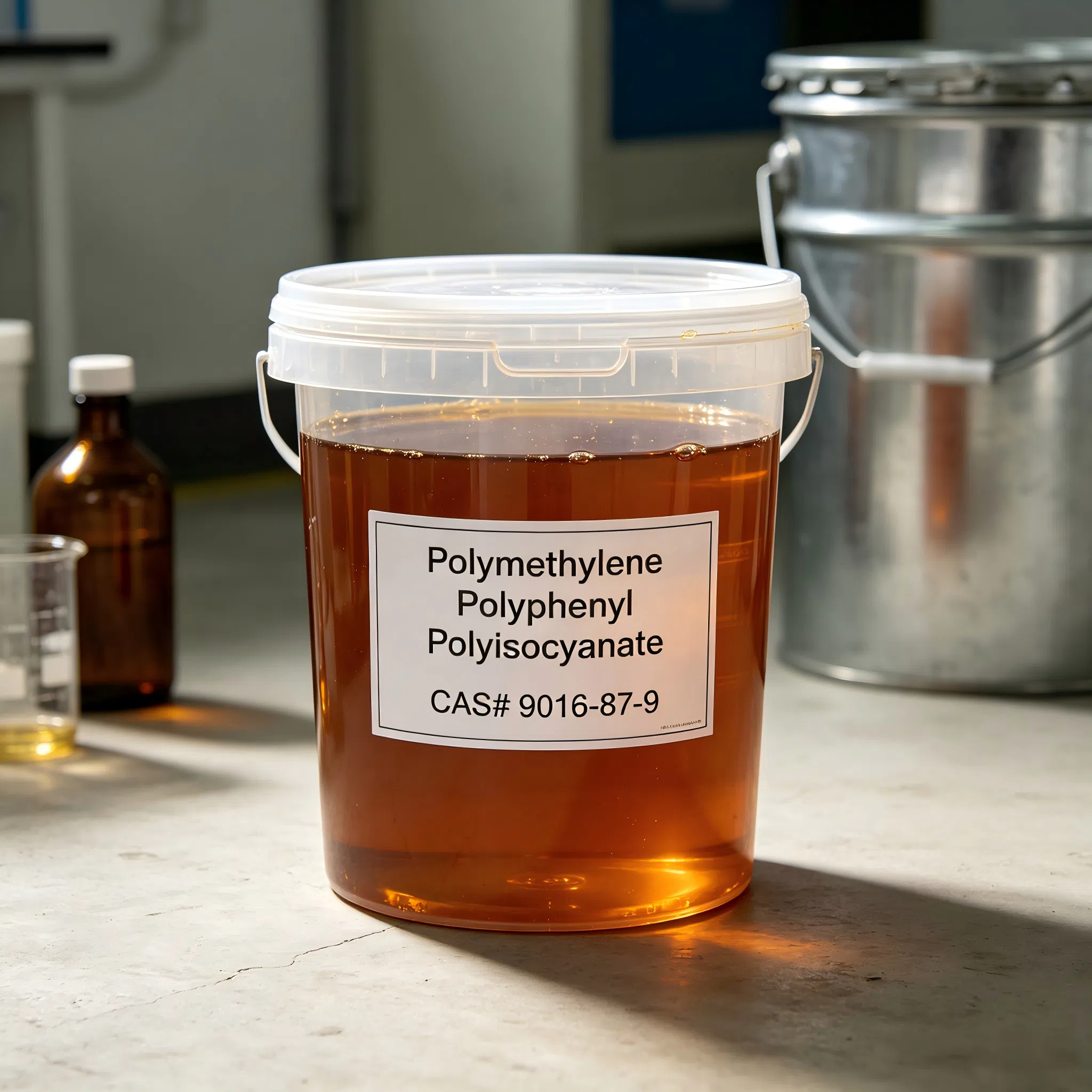
If you have ever poked your head inside a fridge wall, walked across a cold-room floor, or wondered why a car cabin stays quiet at highway speed, you've already met this stuff. Polymethylene polyphenyl polyisocyanate. Polymeric MDI, or PMDI for short. CAS 9016-87-9. It's the brown liquid behind most rigid polyurethane foam on the planet. Anyone shopping for a polymethylene polyphenyl polyisocyanate supplier asks the same three things. What does it actually do? Who buys it? And is right now a good moment to lock in volume? Fair questions. Below are straight answers, pulled from what the market is doing in September 2026 rather than from articles recycled five years ago.
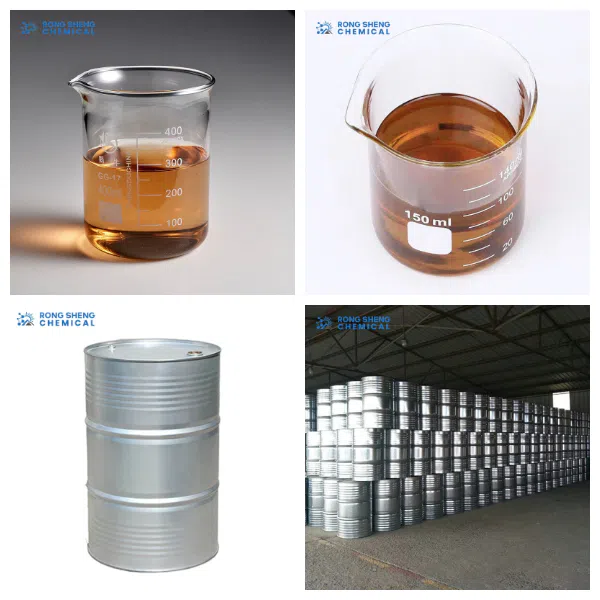
What Exactly Is Polymethylene Polyphenyl Polyisocyanate?
Picture it this way. PMDI isn't one chemical. It's a family. Every molecule in that family is built on the same MDI backbone. Pure MDI is a single, tidy compound. Polymeric MDI is messier. It drags along larger molecules, and its NCO content usually lands between 30% and 32%. That mess is the whole point. Bigger molecules crosslink more tightly. Rigid foam comes out more dimensionally stable, and it grips whatever surface you pour or spray it onto.
In a drum it looks like dark brown to deep amber syrup, and its density sits near 1.22 to 1.24 g/cm3 at room temperature. Add a polyol, a blowing agent, a catalyst and a silicone surfactant, and you have polyurethane in seconds. Two things it hates: heat and moisture. So it ships sealed, in drums, ISO tanks or bulk tankers. Store it cool and dry. Never leave it in the sun.
Follow the molecule back and the price moves start to make sense. Benzene first. Then aniline. Then MDA. Then phosgenation, and out comes MDI plus its polymeric fraction. Plain version: when benzene gets dear, your polymethylene polyphenyl polyisocyanate polyurethane raw material quote gets dear too. So watch the feedstock, not just the buyers.
Main Uses of Polymethylene Polyphenyl Polyisocyanate
1. Rigid polyurethane foam for insulation
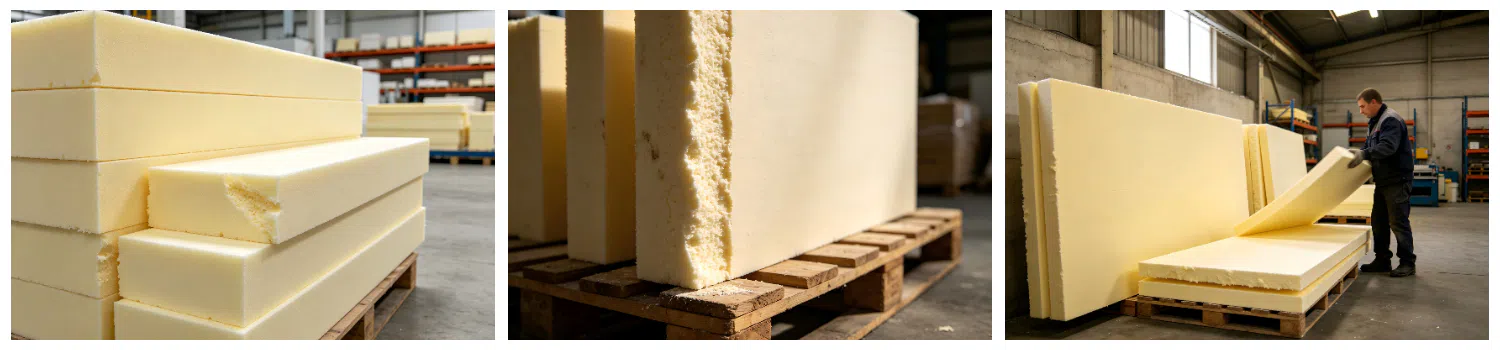
Insulation is the big one. Nothing else comes close. Rigid PU foam production swallows most of the world's PMDI for one simple reason. Per millimetre, nothing mainstream insulates better. Where does it end up? Wall boards. Roof boards. Sandwich panels. Spray foam. Cold-room walls. Building codes drive this. Europe, North America and Asia keep tightening energy rules, and insulation makers keep adding MDI-based lines to keep up.
2. Refrigeration and cold chain equipment
Fridges. Freezers. Vending machines. Refrigerated trucks. PMDI foam gets poured into all of them. That foam does two jobs at once. It keeps cold in and holds the cabinet together. The second job is why appliance engineers obsess over density, flow and demould time. Get the flow wrong and cabinets rattle. Vaccine logistics and online grocery delivery have kept this segment busy too, and it remains one of MDI's steadiest customers.
3. Adhesives, binders, and wood panel resins
Engineered wood loves PMDI. OSB, particleboard and some plywood lines run on MDI resins, because the resin grips straw, chips and recycled fibre, and it doesn't give off formaldehyde. The same chemistry turns up in lamination adhesives, foundry binders and packaging glues. Ask any polymethylene polyphenyl polyisocyanate manufacturer factory that also supplies panel makers. Same answer every time. This segment keeps growing as formaldehyde rules tighten worldwide.
4. Elastomers, coatings, and automotive parts
Cast elastomers. Forklift tyres, industrial rollers, seals, shoe soles. Anywhere abrasion wins. In cars, MDI systems turn up in headliners, steering wheels, seat support layers and acoustic parts. Semi-rigid and integral skin foams add durability without weight. Carmakers want exactly that, and efficiency targets keep getting tougher.
5. Other industrial applications
A few more worth knowing. Pipe-in-pipe insulation for district heating. Buoyancy foam for boats. Protective packaging foam. And PIR boards, which push fire performance further still. Commercial roofing has quietly become one of the better growth stories of the past two years.
2026 Market Review: A Year of Supply Shocks and Rising Prices
Buy bulk polymethylene polyphenyl polyisocyanate for polyurethane foam? Then 2026 has been a strange year. Here is why.
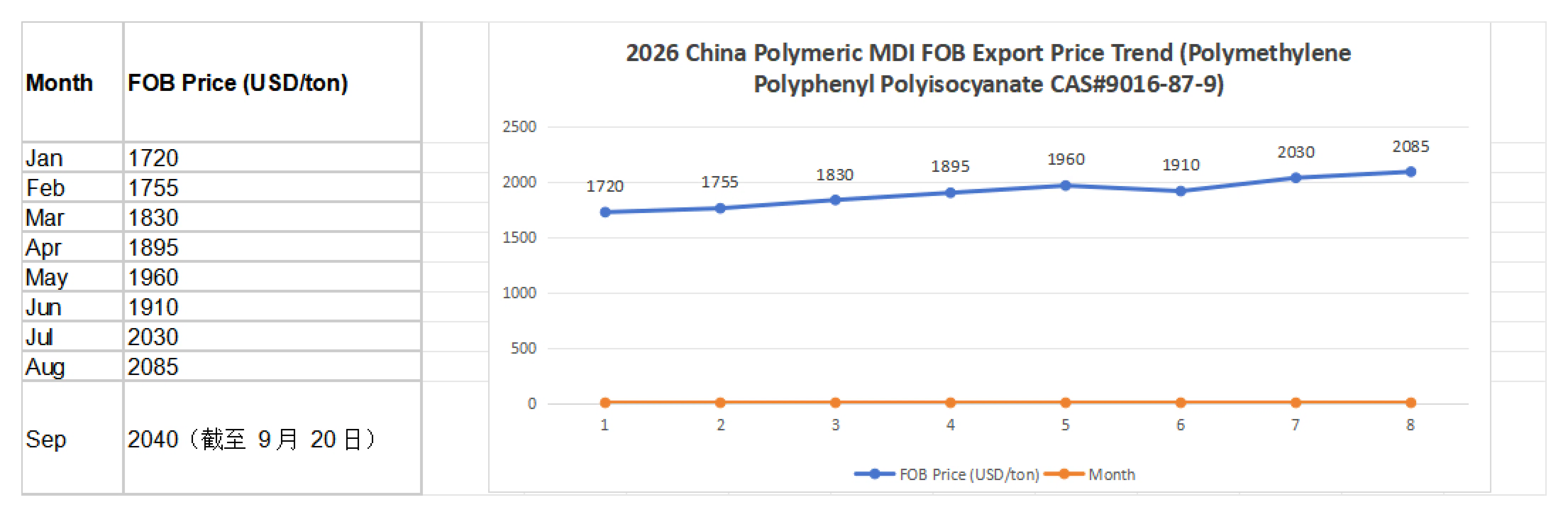
Blame the shipping first. Trouble around the Strait of Hormuz hit Saudi MDI exports hard. PricePedia's September 2026 analysis puts Saudi shipments at roughly 45,000 tonnes in the first quarter, and a little over 7,000 tonnes in the second. Down more than 80%. China went the other way. Exports climbed from about 116,000 tonnes to more than 204,000 tonnes, up around 76%. Global buyers now treat Chinese prices as the reference. Chinese FOB export prices rose a cumulative 61% between February and mid-year. Europe managed about 43%.
Feedstock was the second push. Benzene cleared 1,000 euros per tonne in Europe in April 2026, roughly 30% above pre-conflict levels. It eased afterwards, but never went back to where it started. Benzene feeds straight into isocyanate production costs. So offers kept climbing, even for buyers whose own orders had not changed.
Then plants started dropping out. Wanhua's 1.1 million tonne-per-year Yantai unit went into a planned 45-day shutdown on August 10. Its Fujian site, 800,000 tonnes, had already been through maintenance in late June. Covestro declared force majeure in North America. Dow had an unplanned Middle East outage. BASF ran into operational trouble in India. Analysts reckoned close to a fifth of global MDI capacity was limping or offline over the summer. Domestic Chinese prices tell the story. They opened 2026 near 14,200 yuan per tonne, spiked above 20,700 yuan in early April, slid through May and June, then turned back up from late August.
September kept the momentum. BASF raised Lupranate MDI and TDI grades by $250 per tonne across ASEAN and South Asia, effective September 11. Wanhua followed on September 14 with $300 per tonne on MDI and TDI in Southeast Asia and South Asia, plus $400 per tonne on polyether polyols. BorsodChem, Wanhua's Hungarian arm, lifted European MDI, TDI and polyol prices by 300 euros per tonne from September 16. Chinese reference prices for polymeric MDI went from 17,366 yuan per tonne on September 7 to about 18,467 yuan by September 16. Shanghai spot deals had already touched 19,500 yuan in mid-August.
So what does all this mean for you? Posted increases are real. Demand, though, is still cautious. The price you actually pay can sit well below the number on the letter. That gap is where a good polymethylene polyphenyl polyisocyanate dealer earns their keep. This quarter, a factory holding an allocation contract and a trader sitting on stock will quote you two very different prices. Choosing the right supplier matters more than it has in years.
Capacity Expansion Signals Confidence in the Long Term
None of this has scared the big producers off investing. Covestro is planning a 660,000-tonne-per-year MDI plant at its Shanghai site, targeting start-up around 2030, with a parallel project in the United Arab Emirates. Wanhua is still the world's largest MDI producer. The top five players hold more than 90% of global capacity between them. That concentration keeps pricing disciplined through the cycle. Supply keeps coming from established names, not hopeful newcomers. Once the next wave of capacity lands later this decade, buying should get easier. Until then, security of supply is the whole conversation in the polymethylene polyphenyl polyisocyanate suppliers market.
How PMDI Is Converted Into Polyurethane Products
Know how the material becomes a product and you'll ask better questions. On a typical rigid foam line, polymeric MDI is metered against a polyol blend. That blend carries catalysts, water or a physical blowing agent, plus a silicone surfactant. The two streams meet at high pressure. Reaction starts in seconds. The foam rises and cures in a mould or on a continuous laminator. Formulators tune the isocyanate index, usually 105 to 130 for rigid systems, to balance hardness, insulation and cost.
Quality checks come down to four things. NCO content, viscosity, acidity, hydrolysable chlorine. A serious supplier sends a certificate of analysis with every lot and keeps batches consistent, because foam lines are tuned to one specific reactivity profile. Swap polymethylene polyphenyl polyisocyanate sources without a trial and you'll pay for it. Ask for samples. Run a small lot. Then commit to volume.
Handling and Safety Considerations
One thing to be clear about. Uncured PMDI is a respiratory and skin sensitiser, so handle it with proper controls. Decanting drums or running the machine? Chemical-resistant gloves, eye protection, suitable respiratory protection. The workshop needs decent ventilation. Once the material has reacted into cured foam, free monomer left in the product is very low, and a finished insulation board or fridge cabinet is fine for normal use. Storage is simple but strict. Keep containers sealed, dry and below about 25 degrees C, ideally under nitrogen. Moisture sets off CO2 build-up, and CO2 build-up splits drums. Comparing polymethylene polyphenyl polyisocyanate CAS 9016-87-9 dealers? Read the safety data sheet first, then check the paperwork matches your local transport and workplace exposure rules.
Frequently Asked Questions
Is MDI an isocyanate?
Yes. MDI stands for methylene diphenyl diisocyanate, and it carries two reactive NCO groups. Polymeric MDI goes a step further. It blends MDI with larger molecules that hold three or more NCO groups each. Both belong to the aromatic isocyanate family used across polyurethane chemistry.
What are the uses of polymethylene polyphenylene isocyanate?
Mostly rigid polyurethane and polyisocyanurate foams. Building insulation, fridges and freezers, cold-chain equipment, sandwich panels. It also works as a binder for wood panels, an ingredient in adhesives and sealants, and a raw material for cast elastomers, coatings and car interior parts.
Are isocyanates safe to use?
If you handle the liquid carelessly, yes. It can sensitise your lungs and skin, so ventilation, exposure control and protective gear aren't optional on the shop floor. The real risk sits in the liquid stage during processing. After the polyurethane cures, whether that is an insulation board or a fridge cabinet, the product is stable and safe for everyday use.
What is polymeric isocyanate used for?
Wherever you need rigid, strong, thermally efficient polyurethane. Insulation foam, refrigeration cabinets, construction panels, wood binders, adhesives, moulded industrial parts. It's the highest-volume isocyanate in the rigid foam world.
Outlook and Buyer Guidance
For the rest of 2026, most people watching this market expect prices to stay firm. Maintenance seasons, freight costs and benzene economics all keep supply tight. Construction and appliance demand is cautious, not roaring. Watch two things. Winter shutdowns at the big plants, and how fast buyers restock before Chinese New Year. Both will shape the next round of offers.
Three practical moves, if your business runs on this chemistry. First, nail down your allocation for the coming quarter, before announced increases work their way into real transaction prices. Second, qualify a second source, so one plant outage can't stop your line. Third, pick a supplier with flexible packaging, from 200-kilogram drums to ISO tanks, and full documentation. Certificates of analysis. Safety data sheets. The lot.
Ready to secure your supply? We're a professional polymethylene polyphenyl polyisocyanate supplier. High purity polymethylene polyphenyl polyisocyanate CAS#9016-87-9, consistent batch quality, competitive bulk pricing for polyurethane foam manufacturers, and technical support that actually answers when you call. Rigid insulation boards, refrigeration cabinets, wood panel binders, specialty elastomers. We can match a grade and a package to your line. Get in touch for a quotation and free samples, and let's lock in your polyurethane raw material supply for the season ahead.


