Product Description
D-(-)-Tartaric acid, also known as (S,S)-tartrate or D-threaric acid, is an organic compound categorized as a sugar acid derivative. Compounds of this class feature a saccharide backbone functionalized with carboxylic acid groups, endowing them unique chemical properties for organic applications.
Naturally occurring D-(-)-tartaric acid has been found in loquats (Eriobotrya japonica), though its exact content in this natural source has not been quantitatively characterized.
Properties
| Melting point | 172-174 °C(lit.) |
| alpha | -12.1 º (c=20, H2O) |
| Boiling point | 191.59°C (rough estimate) |
| density | 1,8 g/cm3 |
| refractive index | -12.5 ° (C=5, H2O) |
| Fp | 210 °C |
| storage temp. | Store below +30°C. |
| solubility | water: soluble100mg/mL, clear, colorless |
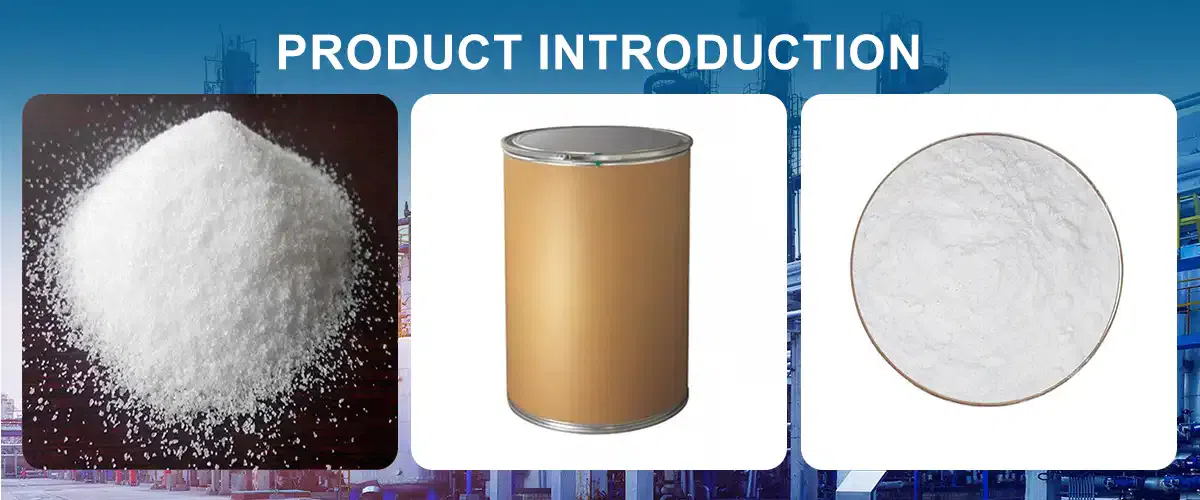
| form | Crystals or Crystalline Powder |
| pka | 3.0, 4.4(at 25℃) |
| color | White |
| Odor | odorless |
| Optical Rotation | [α]20/D 13.5±0.5°, c = 10% in H2O |
| Water Solubility | 1394 g/L (20 ºC) |
| Sensitive | Light Sensitive |
| Merck | 149068 |
| BRN | 1725145 |
| Dielectric constant | 35.9(-10℃) |
| Stability: | Stable. Incompatible with oxidizing agents, bases, reducing agents. Combustible. |
| InChIKey | FEWJPZIEWOKRBE-LWMBPPNESA-N |
| LogP | -1.081 (est) |
| CAS DataBase Reference | 147-71-7(CAS DataBase Reference) |
| NIST Chemistry Reference | D-Tartaric acid(147-71-7) |
| EPA Substance Registry System | Butanedioic acid, 2,3-dihydroxy-, (2S,3S)- (147-71-7) |
Safety Information
| Hazard Codes | Xi |
| Risk Statements | 36/37/38 |
| Safety Statements | 26-36/37-37/39-36 |
| WGK Germany | 3 |
| RTECS | WW7875000 |
| Autoignition Temperature | 425 °C |
| Hazard Note | Light Sensitive |
| TSCA | Yes |
| HS Code | 29181200 |
Product Application
D-(-)-Tartaric Acid (CAS 147-71-7) is a naturally derived, optically active organic acid with extensive application value across multiple industries.
In the food industry, it is widely applied as an acidulant and flavor enhancer to adjust and optimize product taste. Additionally, it serves as an effective chelating agent to prolong product shelf life. It can also regulate pH values during fermentation processes, making it highly suitable for brewing and baking production scenarios.
Factory Tour

Package And Shipping