
Product Description
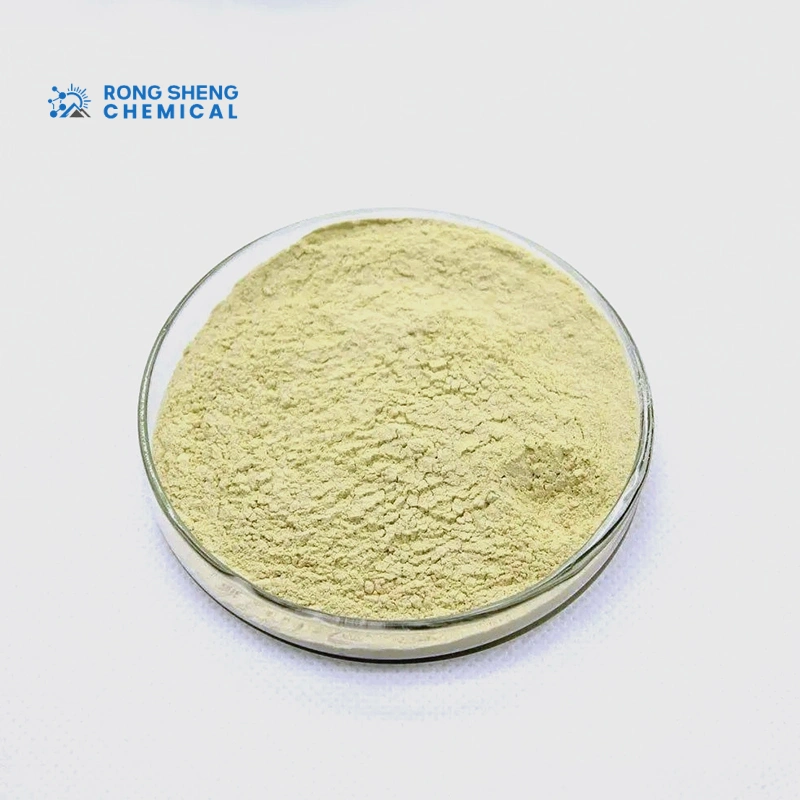
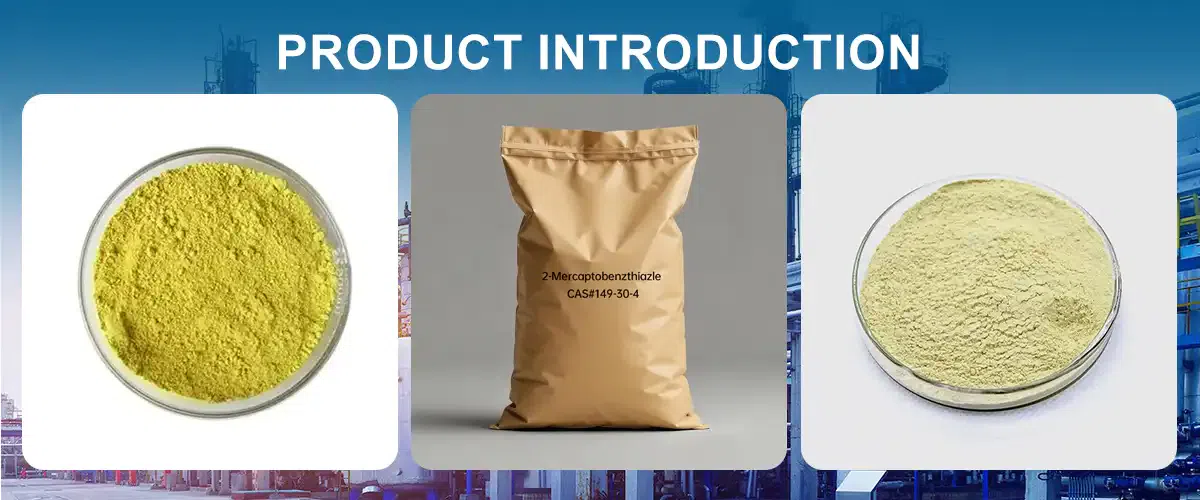
2-Mercaptobenzothiazole appears as pale yellow monoclinic needle-shaped or flaky crystals with a characteristic unpleasant odor. It is insoluble in water and gasoline, while it is readily soluble in organic solvents such as ethanol, ether, acetone, ethyl acetate, benzene, and chloroform, as well as in dilute alkaline solutions.
Properties
| Melting point | 177-181 °C(lit.) |
| Boiling point | 223°C (rough estimate) |
| density | 1.42 |
| vapor pressure | <0.000003 hPa (25 °C) |
| refractive index | 1.6100 (estimate) |
| Fp | 243 °C |
| storage temp. | Store below +30°C. |
| solubility | 0.12g/l |
| form | Powder |
| pka | 9.80±0.20(Predicted) |
| color | Yellow |
| PH | 7 (0.12g/l, H2O, 25℃) |
| Odor | Odorless |
| explosive limit | 15%(V) |
| Water Solubility | <0.1 g/100 mL at 19 ºC |
| Sensitive | Air Sensitive |
| λmax | 325nm(MeOH)(lit.) |
| Merck | 145868 |
| BRN | 119484 |
| Stability: | Stable. Incompatible with strong oxidizing agents. Flammable. |
| InChIKey | YXIWHUQXZSMYRE-UHFFFAOYSA-N |
| LogP | 2.86 |
| CAS DataBase Reference | 149-30-4(CAS DataBase Reference) |
| NIST Chemistry Reference | 2-Mercaptobenzothiazole(149-30-4) |
| IARC | 2A (Vol. 115) 2018 |
| EPA Substance Registry System | 2-Mercaptobenzothiazole (149-30-4) |
| Hazard Codes | Xi,N |
| Risk Statements | 43-50/53 |
| Safety Statements | 24-37-60-61 |
| RIDADR | UN 3077 9/PG 3 |
| WGK Germany | 2 |
| RTECS | DL6475000 |
| F | 9-13-23 |
| Autoignition Temperature | 465 °C |
| TSCA | Yes |
| HazardClass | 9 |
| PackingGroup | III |
| HS Code | 29342020 |
| Hazardous Substances Data | 149-30-4(Hazardous Substances Data) |
| Toxicity | LD50 orally in Rabbit: 1680 mg/kg LD50 dermal Rabbit > 7940 mg/kg |
Product Application
2-Mercaptobenzothiazole (Accelerator M) is a general-purpose vulcanization accelerator widely used in various types of rubber. It provides rapid acceleration for natural rubber and sulfur-vulcanized synthetic rubbers. Before application, it usually requires activation with zinc oxide, fatty acids, or other activating agents.
This product is commonly used in combination with other accelerator systems, such as thiuram disulfide and tellurium dithiocarbamate for butyl rubber applications. It can also be combined with tribasic maleic acid lead for light-colored water-resistant chlorosulfonated polyethylene rubber, and is frequently used with dithiocarbamates in latex systems. When combined with diethyl dithiocarbamate diethylamine, it enables room-temperature vulcanization.
2-Mercaptobenzothiazole has good dispersibility in rubber compounds and does not cause pollution. However, due to its bitter taste, it is not suitable for rubber products intended for food contact. It is also an important intermediate for producing other accelerators, including MZ, DM, NS, DIBS, CA, DZ, NOBS, and MDB.
In addition, 2-Mercaptobenzothiazole can be used in dye synthesis. It reacts with 1-amino-4-nitroanthraquinone and potassium carbonate in dimethylformamide under reflux conditions to produce Disperse Red S-GL (C.I. Disperse Red 121), which is applied for dyeing polyester and blended fabrics.
As an electroplating additive, 2-Mercaptobenzothiazole is also known as acid copper plating brightener M and is used as a leveling auxiliary brightener in bright copper plating systems based on copper sulfate. It is further applied in the preparation of pesticide fungicides, nitrogen fertilizer synergists, cutting oils, lubricant additives, organic anti-ashing agents in photographic chemistry, metal corrosion inhibitors, and other chemical products. It can also serve as a reagent for chemical analysis. This product has low toxicity but may cause irritation to the skin and mucous membranes.
Factory Tour

Package And Shipping


