
Product Description
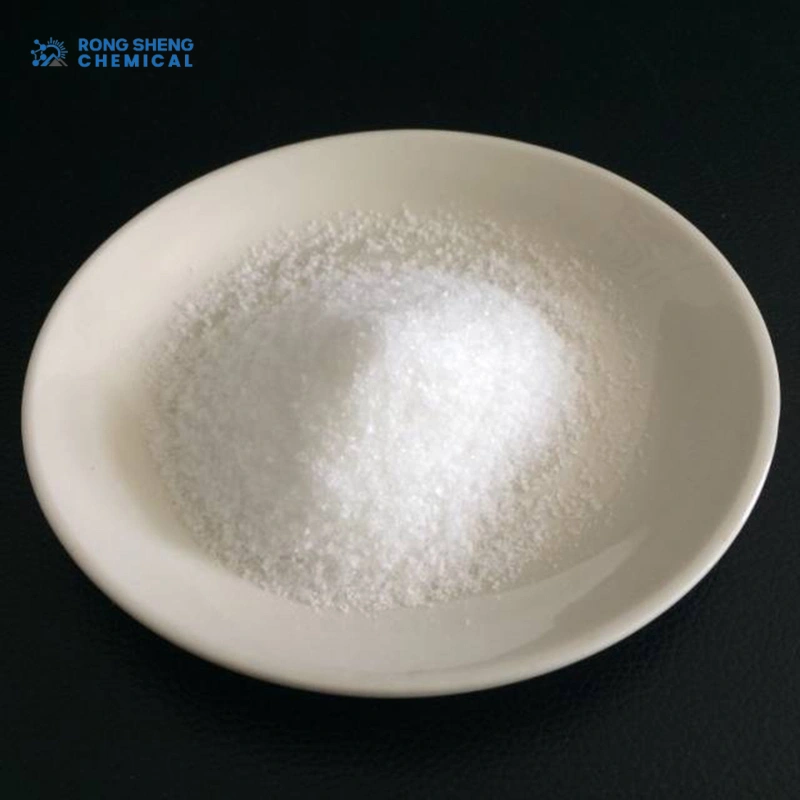
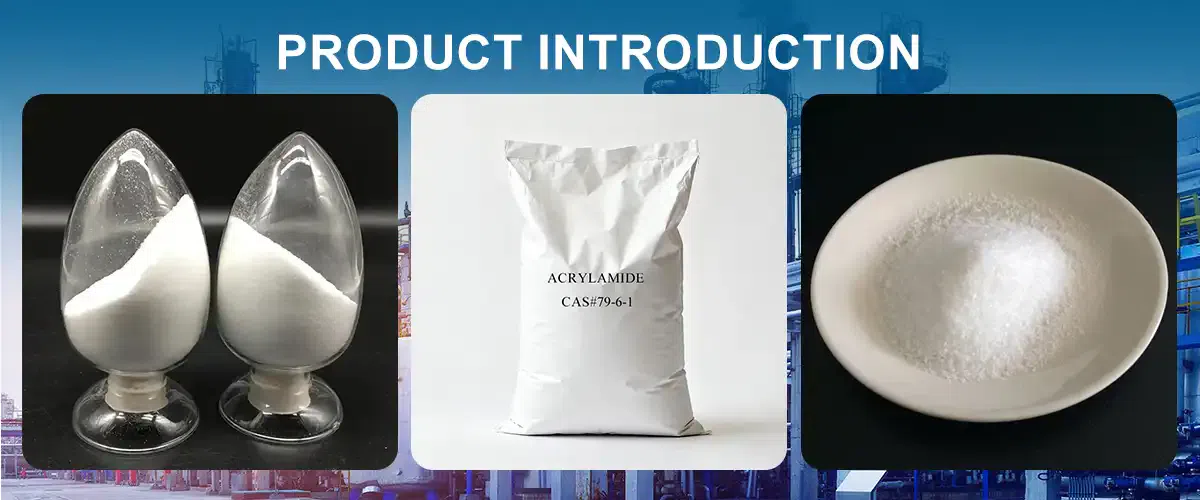
Acrylamide is an important organic synthetic monomer that combines strong chemical reactivity with distinct physical properties. At room temperature, it appears as a white crystalline powder. Pure-grade products are odorless, while industrial-grade materials may exhibit a slightly pale yellow color or a mild pungent odor due to trace impurities. The crystals are hygroscopic and tend to absorb moisture, gradually softening or even dissolving after moisture uptake.
Properties
| Melting point | 82-86 °C(lit.) |
| Boiling point | 125 °C25 mm Hg(lit.) |
| density | 1,322 g/cm3 |
| bulk density | 500kg/m3 |
| vapor density | 2.45 (vs air) |
| vapor pressure | 0.03 mm Hg ( 40 °C) |
| refractive index | 1.46 |
| Fp | 138 °C |
| storage temp. | 2-8°C |
| solubility | 2040 g/L (25°C) |
| form | powder |
| pka | 15.35±0.50(Predicted) |
| color | White |
| Odor | Odorless solid |
| PH | 5.0-7.0 (50g/l, H2O, 20℃) |
| Water Solubility | Acrylamide is routinely tested at 250 mg/mL in water, giving a clear colorless solution. It is soluble at least to 40% (w/v) in water, and reportedly up to 215 g/100 mL in water at 30°C. |
| Sensitive | Light Sensitive |
| Merck | 14129 |
| BRN | 605349 |
| Henry's Law Constant | (x 10-9 atm?m3/mol): 3.03 at 20 °C (approximate - calculated from water solubility and vapor pressure) |
| Exposure limits | Potential occupational carcinogen. NIOSH REL: TWA 0.03, IDLH: 60; OSHA PEL: TWA 0.3; ACGIH TLV: TWA 0.03. |
| Stability: | Unstable. Do not heat above 50C. Explosive. Incompatible with acids, bases, oxidizing agents, reducing agents, iron and iron salts, copper, aluminium, brass, free radical initiators. Air sensitive. Hygroscopic. |
| InChIKey | HRPVXLWXLXDGHG-UHFFFAOYSA-N |
| LogP | -0.9 at 20℃ and pH7 |
| CAS DataBase Reference | 79-06-1(CAS DataBase Reference) |
| NIST Chemistry Reference | Acrylamide(79-06-1) |
| IARC | 2A (Vol. 60, Sup 7) 1994 |
| EPA Substance Registry System | Acrylamide (79-06-1) |
Product Usage
Acrylamide is primarily used as the core monomer for synthesizing polyacrylamide (PAM) and various copolymers. Its derivative products are extensively applied in water treatment, oil recovery, papermaking, polymer materials, and biological experiments. In addition, it is also used in soil improvement, textile printing and dyeing, mineral processing, and other related applications.
Factory Tour

Package And Shipping


